



Man Ray Licensed Series Chess Pieces - 3.25'' King
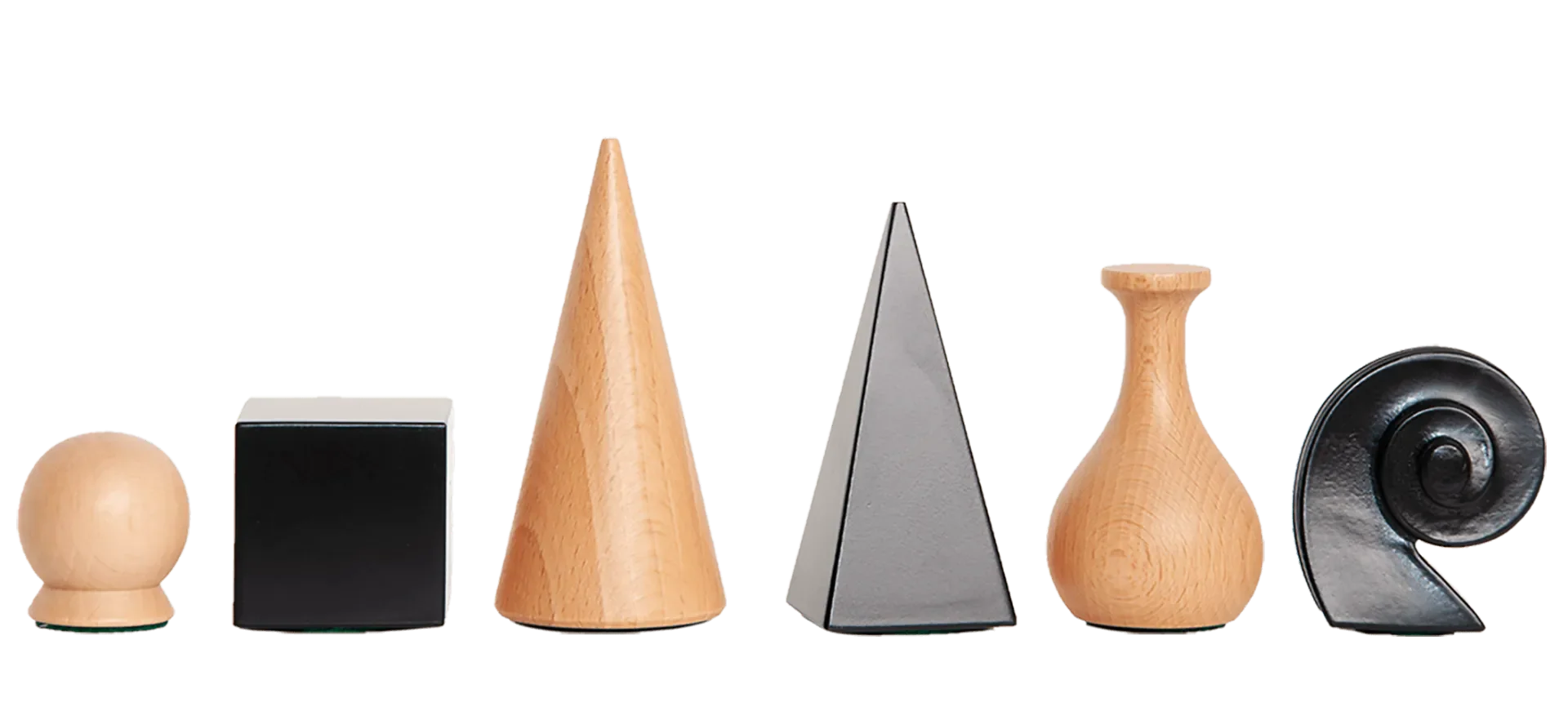
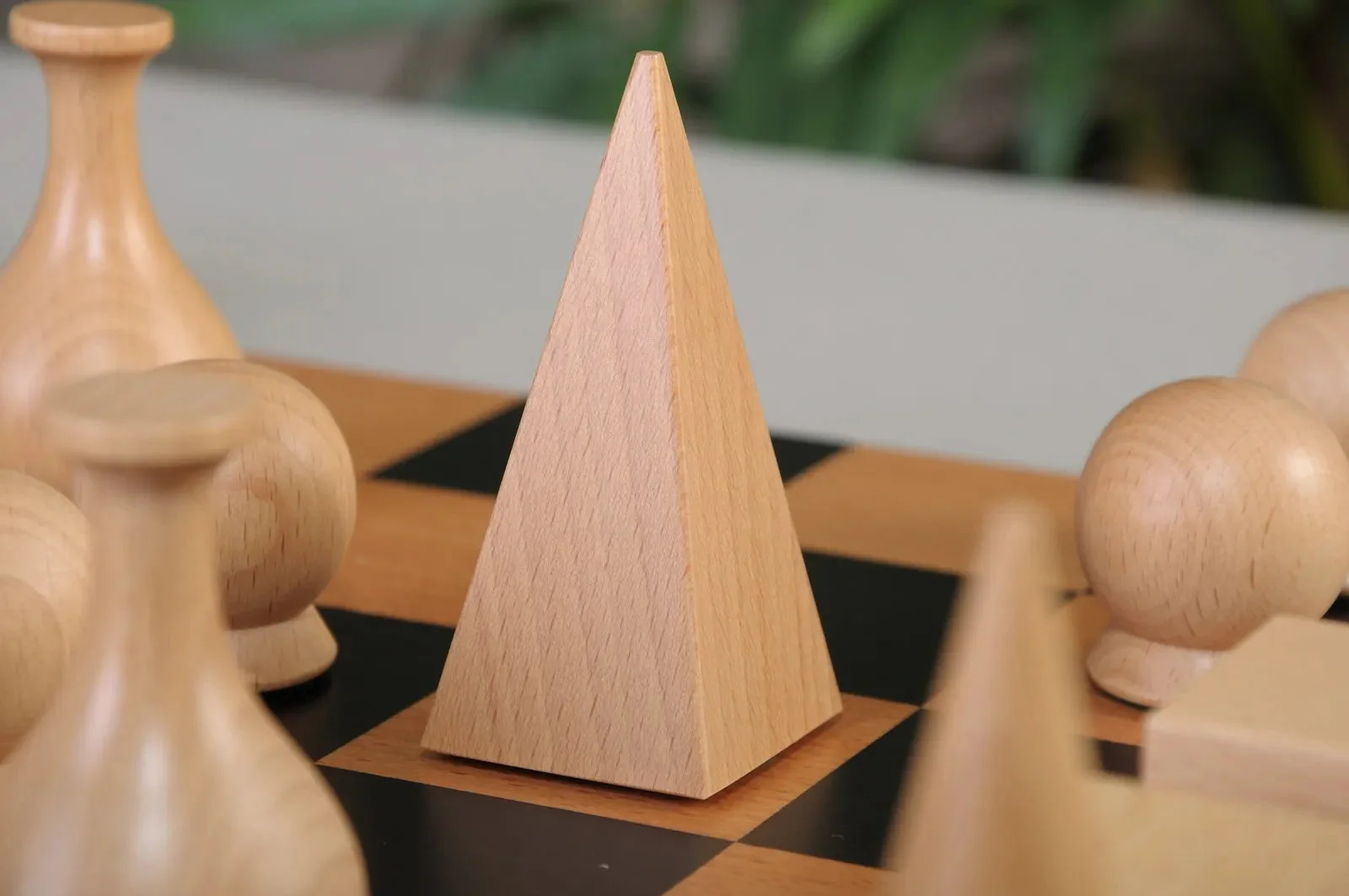
Man Ray designed this chess set in 1920 using found objects from his studio. Most of the pieces are geometric models made for still-life drawing (the king is a pyramid, the queen a cone, the rook a cube, the pawn a sphere).
The knight—the finial of a violin—was fashioned from a box of abandoned violin necks. Only a handful were ever produced (the maharajah of Indore commissioned a set made from silver-plated brass).
As well as constructing his set from practical items, Man Ray's design (just like his artwork) utilizes symbolic design. The King represents the Egyptian king's pyramid; the Queen is the conical headdress of a medieval queen; the Bishop represents a flask for concocting healing liqueurs. The Pawn is nearly as tall as the Rook, perhaps symbolizing the hidden importance of the Pawn in the game.
This re-edition is rendered in Beech wood, as Man Ray originally intended, and is based on a set housed in the Metropolitan Museum of Art. To play with this set is to create a slow moving, sculptural tableau. You'll want to take your time pondering your next move.
About Man Ray:
Man Ray was an American Modernist artist who spent most of his life in Paris, France. A significant contributor to both the Dadaist and Surrealist movements, Ray was close friends with other artists at the time, including Salvador Dali and Marcel Duchamp, even including the latter in a brief scene in one of his many arthouse films:
As with Dali and Duchamp, Chess factored into many of Man Ray's works. It is no surprise, then, that he strived to design his own Chessmen!
Product Information
Product Information
Shipping & Returns
Shipping & Returns
Description
Man Ray designed this chess set in 1920 using found objects from his studio. Most of the pieces are geometric models made for still-life drawing (the king is a pyramid, the queen a cone, the rook a cube, the pawn a sphere).
The knight—the finial of a violin—was fashioned from a box of abandoned violin necks. Only a handful were ever produced (the maharajah of Indore commissioned a set made from silver-plated brass).
As well as constructing his set from practical items, Man Ray's design (just like his artwork) utilizes symbolic design. The King represents the Egyptian king's pyramid; the Queen is the conical headdress of a medieval queen; the Bishop represents a flask for concocting healing liqueurs. The Pawn is nearly as tall as the Rook, perhaps symbolizing the hidden importance of the Pawn in the game.
This re-edition is rendered in Beech wood, as Man Ray originally intended, and is based on a set housed in the Metropolitan Museum of Art. To play with this set is to create a slow moving, sculptural tableau. You'll want to take your time pondering your next move.
About Man Ray:
Man Ray was an American Modernist artist who spent most of his life in Paris, France. A significant contributor to both the Dadaist and Surrealist movements, Ray was close friends with other artists at the time, including Salvador Dali and Marcel Duchamp, even including the latter in a brief scene in one of his many arthouse films:
As with Dali and Duchamp, Chess factored into many of Man Ray's works. It is no surprise, then, that he strived to design his own Chessmen!